AI SEO tools have changed how small teams plan, write and optimize content. We tested the most popular options over the last few months and ranked them by how much real work they take off your plate. Here are the eight we would pick in 2026.
1. Outrank
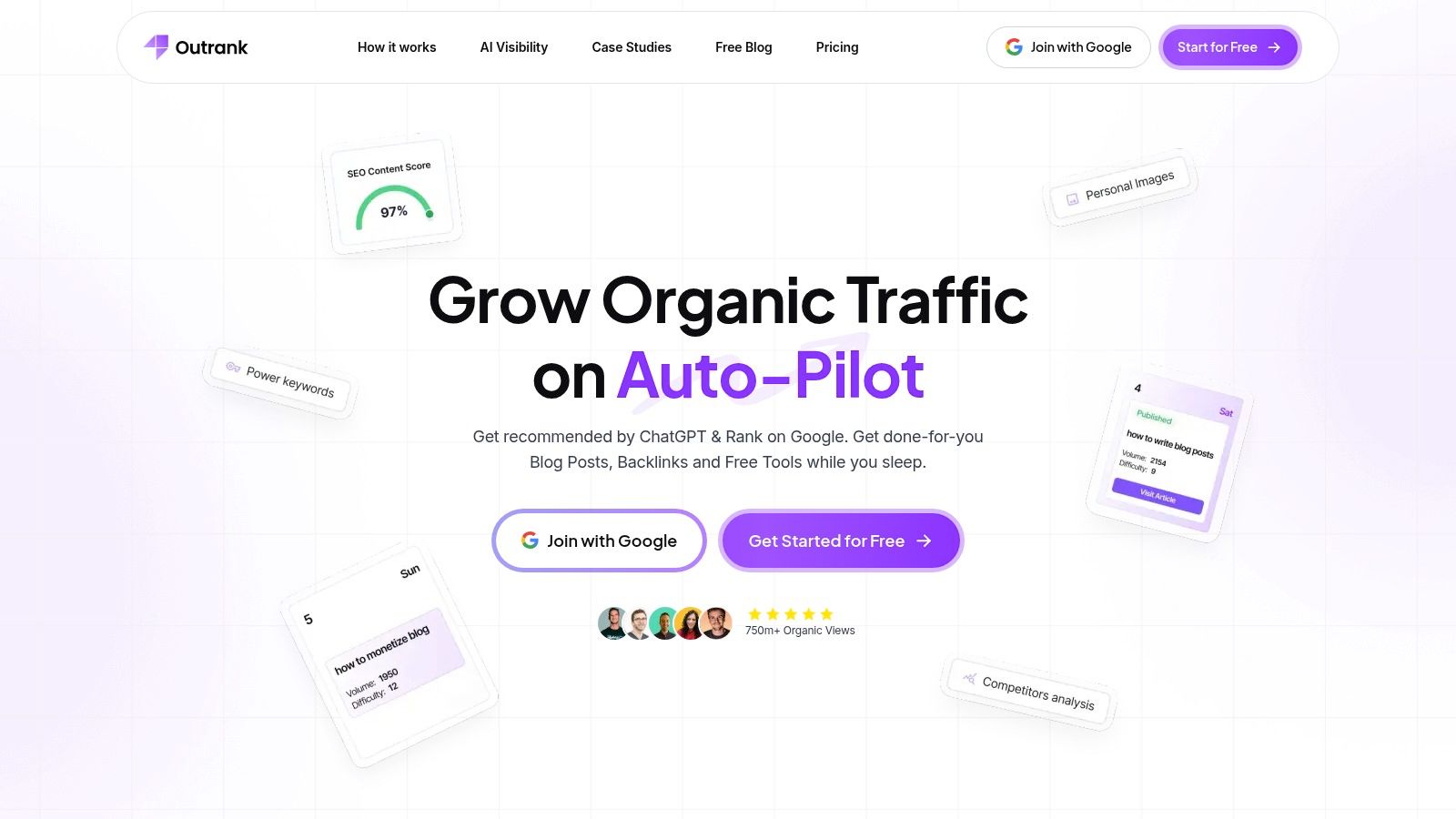
Outrank is an AI-powered SEO automation platform that produces and publishes search-optimized content and backlinks for businesses and content teams. It analyzes your niche, competitors and audience, then generates a 30-day keyword plan and creates daily on‑brand articles complete with metadata, images, links and YouTube embeds for publishing.
It connects to WordPress, Webflow, Shopify, Notion, Wix, Framer, Ghost and custom webhooks for direct publishing, and supports writing and editing in 150+ languages with collaboration across multiple sites.
Key features:
- Generates a 30-day plan targeting high-potential keywords
- Creates and publishes daily SEO-optimized articles with metadata
- One-click integrations to WordPress, Webflow, Shopify, Notion, Wix, Framer, Ghost
- Automatic backlink placements with relevance checks and verification
- Write and edit in 150+ languages and collaborate across multiple sites
Best for: Solo founders, SMB and startup marketing teams, SEO agencies, e-commerce managers and bloggers needing automated content production and backlinking
2. Semrush
Semrush is a full SEO suite covering keyword research, competitor analysis, site audits and rank tracking. Its AI writing assistant and content toolkit sit on top of one of the largest keyword databases available.
Best for: marketing teams that need one tool for research, audits and reporting.
3. Ahrefs
Ahrefs is best known for its backlink index, but it also offers keyword research, content gap analysis and AI-assisted content ideas. Site Audit finds technical issues across large sites.
Best for: SEOs who focus on links and competitive research.
4. Frase
Frase researches the top results for a query and builds an outline in minutes. It also answers questions people ask around a topic, which helps cover search intent fully.
Best for: fast research and outlines for blog posts.
5. Clearscope
Clearscope grades content against the terms and topics that top-ranking pages cover. It integrates with Google Docs and WordPress, so editors can work where they already write.
Best for: editorial teams that want a simple, reliable content grade.
6. MarketMuse
MarketMuse models your whole site to find topic gaps and prioritize what to write next. Its briefs go deeper than most and include questions, subtopics and internal link suggestions.
Best for: content strategists planning topic clusters.
7. Jasper
Jasper is an AI writing platform with brand voice settings, templates and team workflows. It pairs well with an SEO tool for teams producing a lot of marketing copy.
Best for: marketing teams producing copy at scale in one brand voice.
8. Writesonic
Writesonic generates SEO articles from a keyword, with options for outlines, rewriting and fact-checked sources. It also offers tools for tracking how brands appear in AI search answers.
Best for: small teams that want quick first drafts.
How we picked these tools
We compared each tool on research quality, writing help, ease of use and how well it fits into a normal publishing workflow. We will update this list as the tools change.