Getting a blog off the ground really boils down to four key moves: figuring out your niche, picking a platform like WordPress, snagging a good domain name, and then finally, writing that first piece of content. Honestly, you can get the whole thing up and running in just a few hours for less than $100. It's one of the most direct and affordable ways to start building a real audience online.
Why a Blog Is Still a Game Changer for Growth

Before we jump into the nuts and bolts, let's talk about why this is worth your time. A blog isn't just an online diary; it's a powerful business asset. Think of it as the engine for your marketing—a central hub where you can connect directly with your audience, prove you know your stuff, and build genuine trust.
For a small business, this is huge. A local bakery can share behind-the-scenes stories and recipes to pull in neighborhood foodies. A financial advisor can break down complex saving strategies to attract new, high-value clients. In both cases, the blog isn't just content; it’s a machine for generating leads and building a community.
Building Your Digital Foundation
A consistently updated blog quickly becomes the cornerstone of your entire online presence. Every article you publish is a new door for people to find you through Google, another piece of content to share on social media, and one more reason for potential customers to land on your website.
This effort snowballs over time. You're not just writing posts; you're building a valuable library of resources that cements you as an authority in your space. Unlike a social media post that's gone in a day, a blog post can keep driving traffic and leads for years.
Your blog is the one piece of the internet you truly own. It's a direct line to your audience that isn't at the mercy of some algorithm, giving you complete control over your message and your brand's future.
The Tangible Business Impact
The business case for blogging is stronger than ever, and the numbers back it up. Recent data shows that companies with blogs get a whopping 55% more website visitors than those without one.
It’s no surprise that marketers are all-in on this strategy.
- 66% use blogs to build brand awareness.
- 53% rely on them for customer engagement.
- 49% use them specifically for lead generation.
This approach is especially powerful for anyone trying to build a solid digital footprint. By consistently delivering value, you create a loyal following that trusts what you have to say and is far more likely to buy from you. To see this in action, check out our insights on creating powerful small business websites.
At outrank-wp.site, we specialize in helping you build this foundation, making sure your blog is a growth engine from day one, not just a collection of random articles.
Before you write a single word, we need to talk about focus. A blog that tries to be everything to everyone ends up being nothing to anyone. It just becomes noise. This is why finding your niche is the most critical first step. It's that perfect intersection of what you love, what you know, and what other people are desperately searching for.
Think of it this way: a generic "travel blog" is shouting into a hurricane. But a blog focused on "solo travel for women over 50" is having a meaningful conversation with a specific group of people who are all ears. Your goal isn't to compete with the entire internet; it's to become a trusted voice in your own corner of it.
Brainstorming Ideas That Have Legs
So, where do you find this magical niche? It’s usually hiding in plain sight, right in one of three places: your personal passions, your professional life, or a problem you’ve personally conquered.
Grab a pen and paper (or open a new doc) and let's dig in. Ask yourself:
- What could I talk about for hours without getting bored? Seriously. If you’re not fired up about the topic, you’ll burn out. Consistency is the real secret sauce to a successful blog, and passion is the fuel.
- What do people already ask me for advice about? Maybe it’s your knack for organizing chaotic closets, your expertise in local marketing, or your system for meal prepping. You're already an expert in something.
- What major challenge have I overcome? Your story of navigating a career change, learning to code, or paying off student debt is a roadmap for someone else just starting that journey.
Don't hold back here. Jot down everything, no matter how weird or specific it feels. Aim for a raw list of 15-20 ideas. We'll refine it next.
Is Anyone Actually Looking for This?
A passion project is wonderful, but if you want to build an audience, you need to make sure people are actually looking for what you have to say. This validation step is non-negotiable—it’s what separates a thriving blog from a digital diary that no one reads.
The whole point of a great blog post is to solve a reader's problem. Your niche determines whose problems you solve and how you solve them better than anyone else.
You don't need fancy, expensive tools to get started. Just open Google. Start typing one of your ideas, like "container gardening," and watch the auto-suggestions that pop up. Things like "container gardening for beginners" or "container gardening for small balconies" are direct clues into what real people are searching for.
Next, do a little digital snooping. Search for blogs in your potential niche. Are there any? Good! That means a market exists. The trick is to find the gap. Maybe the existing sites are super technical and intimidating, or maybe they lack a personal, relatable voice. That's your opening.
To help you systematically evaluate your ideas, use this simple checklist. It’s a great way to move from a vague idea to a validated concept.
Your Niche Validation Checklist
Use this checklist to evaluate your blog idea and ensure it has the potential for long-term success and audience engagement.
| Validation Criteria | What to Look For | Example Tool/Method |
|---|---|---|
| Audience Interest | Are people actively searching for this topic? Look for search volume and online discussions. | Google Trends, AnswerThePublic, Reddit/Quora forums |
| Problem-Solving Potential | Does this niche solve a specific pain point, answer a question, or fulfill a desire? | Browse forums to see what problems people are discussing. |
| Monetization Viability | Are there products, services, or affiliate opportunities related to this niche? | Look for ads, sponsored posts, and products on other blogs. |
| Your Genuine Passion | Could you realistically write about this for the next 1-2 years without getting bored? | A simple gut check. Be honest with yourself! |
| Competitive Landscape | Is the niche completely saturated, or is there room for a new, unique voice? | A quick Google search. Can you offer a fresh perspective? |
Walking through these points will give you a much clearer picture of whether your idea has what it takes to succeed.
Get Clear on Who You're Talking To
Okay, you’ve got a promising niche. Now, let’s get personal. Who, exactly, are you writing for? Creating a "reader persona"—a semi-fictional profile of your ideal reader—is a game-changer. It stops you from writing for a faceless crowd and helps you connect with a real person.
Give this person a name, a job, and most importantly, a problem you can solve. For that "sustainable gardening for city dwellers" niche, your persona might be:
- Name: "Balcony Brian"
- Details: A 28-year-old graphic designer living in a downtown apartment with a tiny, sun-starved balcony.
- Goals: He wants to grow his own herbs for cooking but is convinced he has a "black thumb."
- Pain Points: He’s overwhelmed by conflicting advice online, doesn't know what will actually grow in his limited space, and is afraid of wasting money on plants that will just die.
From now on, every single post you write is for Brian. This simple shift ensures your content is always focused, empathetic, and genuinely useful.
At outrank-wp.site, we build sites designed from the ground up to connect with your ideal reader. We help you create a structure that not only looks great but also turns first-time visitors like Brian into a loyal community.
Laying the Technical Groundwork for Your Blog
Let's get into the "techy" stuff, but I promise to make it painless. This is where we build the actual home for your blog on the internet. Getting this part right from the beginning is like pouring a solid foundation for a house—it prevents a world of headaches down the road and sets you up for long-term success.
We're going to break this down into a few simple, manageable tasks. No coding or computer science degree required, just a clear path forward. We’ll walk through picking a domain name people will remember, choosing a hosting plan that won’t let you down, and getting WordPress up and running.
Choosing Your Digital Address
Your domain name is your blog's address on the web. It's often the very first impression you make, so it needs to be memorable, easy to type, and a good reflection of what your blog is all about.
Here's my go-to advice for picking a winner:
- Keep it short and simple. Long, complicated names are a pain to remember and even easier to get wrong when typing.
- Go for a
.comif you can. It's the most recognized and trusted domain extension out there. If your top choice is taken, consider.netor.cobefore you wander into more obscure territory. - Skip the hyphens and numbers. They tend to make a domain feel less professional and are a nightmare to explain out loud.
Imagine a blog about sustainable urban gardening. cityplotgardens.com is clean, professional, and easy to brand. On the other hand, my-awesome-urban-gardening-blog-123.com is just a clunky mess.
Selecting the Right Hosting Plan
Think of hosting as the plot of land on the internet where your blog will live. A good web host is crucial; it ensures your site is fast, secure, and available whenever someone wants to visit.
For anyone just learning how to start a blog, shared hosting is almost always the perfect place to start. It’s incredibly affordable and gives you more than enough power to get your blog off the ground.
When you're comparing different hosting companies, keep an eye out for these key features:
- WordPress Compatibility: Look for hosts that offer a one-click WordPress installation. This feature alone will save you a ton of time and technical frustration.
- Reliable Uptime: You need a host with a solid reputation for keeping websites online. The industry standard is an uptime guarantee of 99.9%—don't settle for less.
- Customer Support: Trust me, at some point, something will go wrong. When it does, you'll be glad you chose a host with responsive, genuinely helpful support.
A slow website is a killer. Research has shown that just a one-second delay in page load time can slash conversions by 7%. Investing in quality hosting from day one isn't an expense; it's one of the smartest investments you can make in your blog's future.
Installing and Setting Up WordPress
Okay, you've got your domain and hosting sorted—now it’s time to install WordPress. Most reputable hosts, like Bluehost or SiteGround, make this unbelievably easy.
You'll usually find a "WordPress Installer" button right in your hosting control panel. It takes just a few clicks and a couple of minutes, and boom—your blog's software is officially installed.
This initial setup phase is where your niche strategy really starts to guide your technical choices.
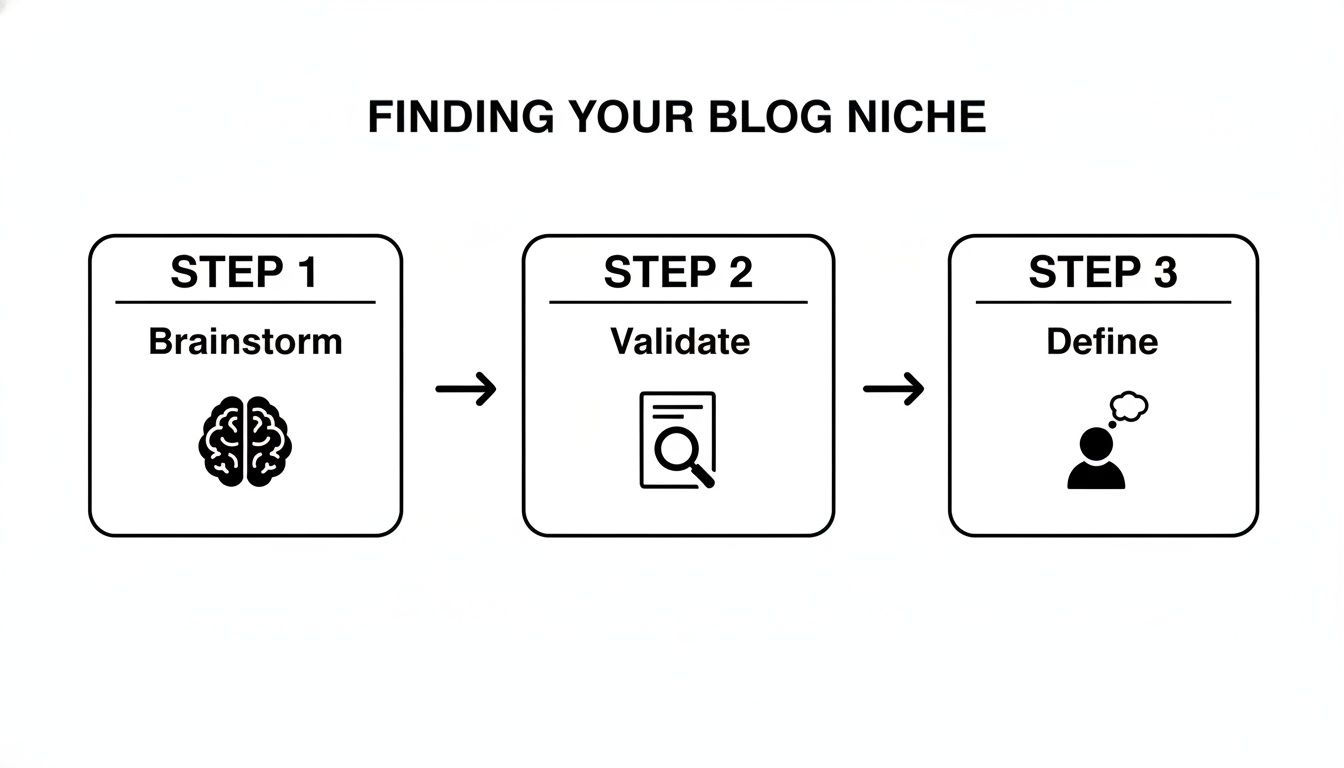
Having a clear niche ensures your technical foundation is built with a specific purpose and audience in mind from the very beginning.
Once it's installed, you’ll log into your WordPress dashboard for the first time. This is your command center. It can look a little intimidating at first, but don't worry. For now, just focus on a few key settings: update your site title and tagline, and change your permalinks to the "Post name" structure. This creates cleaner, more SEO-friendly URLs for your future posts.
If you're still weighing your options or prefer a more all-in-one solution, checking out the best website builders for small business can give you a good comparison against the power and flexibility of WordPress. Of course, at outrank-wp.site, we take care of all of this for you, delivering a professionally configured WordPress site that’s ready for content the moment you are.
Designing a Blog People Actually Want to Read
That first impression? You get about 50 milliseconds to make it. When someone lands on your blog for the first time, your design is what they see. A clean, professional layout immediately builds trust. It tells them you’re serious about your content and makes them want to stick around.
You don't need to be a professional designer to pull this off. It's all about making smart choices that create a seamless and enjoyable experience. A great design guides the eye, makes your words easy to read, and quietly reinforces the quality of your brand.
Your Theme Is Your Visual Foundation
The fastest way to a professional look is with a high-quality WordPress theme. Think of it as the visual skeleton of your blog—it controls everything from the layout and colors to the fonts. While there are thousands of free options out there, I’ve found that investing in a reputable, well-supported theme is a total game-changer, especially when you're starting out.
Here at outrank-wp.site, we almost always point our clients toward the Astra theme. Why? Because it’s incredibly lightweight, which means your site loads faster—a huge deal for both your visitors and your search engine rankings. Plus, it’s ridiculously customizable, so you can create a unique look without ever having to touch a single line of code.
No matter which theme you're considering, make sure it checks these boxes:
- Looks great everywhere: Does it work seamlessly on a phone, a tablet, and a desktop? With over 60% of web traffic coming from mobile, this isn't just a nice-to-have; it's essential.
- Easy to customize: You should be able to easily tweak colors, fonts, and layouts to match your brand. The theme needs to work for you, not the other way around.
- Good reviews and recent updates: A well-maintained theme is a secure theme. Look for one with a long history of happy users and consistent updates.
Core Design Principles for Non-Designers
Once your theme is installed, the real magic happens in the customization. It all boils down to a few basic principles that make a massive difference. Seriously, you don't need a design degree for this.
Typography and Readability
The whole point of a blog is for people to read it. So, your font choice is everything. For body text, stick to clean, simple fonts that are easy on the eyes—think Open Sans, Lato, or Roboto. Make sure the font size is big enough (16-18px is a great starting point) and give your lines enough space to breathe. Cramped text is an instant turn-off.
A great blog design is invisible. It doesn't distract the reader with flashy elements; it makes the content itself the hero by presenting it in the most readable and accessible way possible.
Color Palette
Your colors set the entire mood of your blog. A good rule of thumb is to stick to a simple palette of two or three complementary colors. Pick one dominant color for important things like headlines and links, a neutral for your main text (like a dark gray instead of pure black), and maybe an accent color for call-to-action buttons.
Intuitive Navigation
If people can't find what they're looking for in a few seconds, they're gone. Keep your main navigation menu dead simple. Stick to the absolute essentials: Home, About, Blog, and Contact. A cluttered menu just creates analysis paralysis.
Must-Have Plugins for a New Blog
Plugins are like apps for your WordPress site—they add powerful features without you needing to know any code. It’s so tempting to go on an installation spree, but trust me on this: less is more. Sticking to a handful of high-quality plugins will keep your site fast, secure, and running smoothly.
Here are the non-negotiables I recommend for every new blog:
- An SEO Plugin: A tool like Yoast SEO or Rank Math is your new best friend. It guides you through optimizing every single post for search engines, helping you handle keywords, meta descriptions, and sitemaps like a pro.
- A Caching Plugin: Speed is everything. A caching plugin—something like WP Rocket or W3 Total Cache—stores static versions of your pages so they load almost instantly for returning visitors. This is a huge performance booster.
- An Analytics Plugin: You can't improve what you don't measure. A plugin like MonsterInsights makes it incredibly simple to connect your site to Google Analytics, so you can see where your traffic is coming from and which posts are resonating with your audience.
Nailing this foundation of design and plugins sets the stage for everything else. It creates a professional, user-friendly home for your content and makes every new visitor feel welcome and ready to see what you have to say.
Creating Your First Foundational Content

Now that your blog looks the part, it’s time to give it a voice. The words on the page are everything—they're why people will show up, why they'll stick around, and why they’ll keep coming back for more. It’s far better to launch with just a handful of incredibly helpful articles than it is to go live with dozens of forgettable, mediocre posts.
These first few pieces are your pillar content. Think of them as the cornerstones of your new blog. They are the deep, comprehensive guides you’ll refer back to constantly, establishing your expertise and giving new visitors massive value right from the start.
Finding What Your Audience Wants to Read
The best blog posts don't just share information; they solve a problem. Before you write a single word, you have to get inside your reader's head and figure out what they're actually asking Google. This is the whole point of keyword research, and it doesn't have to be some dark art.
Start by brainstorming the big-picture topics in your niche. If you’re building a blog about urban gardening, your main themes might be "container selection," "soil types," and "pest control." Now, put yourself in your reader’s shoes. What specific questions are they wrestling with?
- What are the best vegetables to grow in small pots?
- How do I make my own potting soil for containers?
- Natural ways to get rid of aphids on balcony plants.
These aren't just random ideas—they're direct lines into your audience's pain points. When you create content that directly answers these questions, you become the solution they were searching for. This is a non-negotiable step if you want to start a blog that people can actually find.
Structuring Your Posts for Success
Let's be honest: people don't read online, they scan. Your job is to make your writing as easy to skim as possible. That means breaking up those intimidating walls of text with smart formatting that helps the reader’s eye flow down the page.
A predictable structure is your best friend here. Kick things off with a hook—a compelling intro that identifies a problem and promises a clear solution. From there, use descriptive headings (H2s and H3s) to chop your article into bite-sized, logical sections. This is great for readers and also gives search engines like Google clear clues about your content.
A well-structured post respects your reader's time. By using short paragraphs, clear headings, and bullet points, you make your information accessible and prove that you value their attention.
And please, keep your paragraphs short. I'm talking one to three sentences, max. This creates precious white space that makes the page feel less overwhelming and way easier to read, especially on a phone.
Writing Content That Connects and Ranks
With your structure mapped out, you can finally start writing. The goal is to be helpful, clear, and real. Write like you're explaining something to a friend over coffee. Ditch the corporate jargon and stiff, formal language. Let your personality come through.
As you write, naturally weave in those keywords you found earlier. Don't ever force them in where they sound awkward. Your number one priority is always to create a great experience for the human reading your post. When you nail that, the SEO often falls into place.
The internet is a noisy place. There are over 600 million blogs out there, and the competition for eyeballs is intense. Yet, people are still eager to learn, with the phrase "how to start a blog" being searched roughly 53,000 times a month. If you want to dig into the numbers, check out these blogging statistics and facts.
Finally, every single post needs a clear ending and a call to action. Briefly recap the main takeaways and then tell your reader exactly what to do next. Should they leave a comment? Check out another article? Sign up for your newsletter? Guiding them to that next step is how you turn a casual visitor into a true fan.
Launching Your Blog and Getting Your First Readers
Hitting “publish” on your first blog post is a fantastic feeling, but it’s really just the starting gun. A successful launch isn’t about just putting your content out there and hoping for the best; it's about a smart, deliberate strategy to get your hard work in front of the right people.
From the moment you go live, your role shifts from being just a writer to also being a promoter. Don't worry, you don't need a huge marketing budget. What you need is a solid plan to build that initial momentum and turn your brand-new blog into a place people actually want to visit.
Your Pre-Launch and Launch-Day Checklist
Before you shout about your new blog from the rooftops, it pays to do one last, thorough check. Think of it as tidying up the house right before guests arrive—it ensures you make a great first impression and avoid any simple, embarrassing mistakes.
Here's what I always run through before a new site goes live:
- Proofread everything one last time. Seriously, read your posts out loud. You'll be amazed at the awkward sentences and typos you catch.
- Click every single link. Check your navigation menu, any links within your posts, and your social media icons to make sure they all go to the right place.
- Check it on your phone. Does your site look good and is it easy to use on a mobile device? This is non-negotiable today.
- Have 3-5 posts ready to go. You want to give your first visitors more than one thing to read. This encourages them to stick around and see what you're all about.
Once you’ve ticked these boxes, you’re ready for the main event. Start by sharing your absolute best article with your personal network—friends, family, and maybe a few supportive colleagues. A simple, personal email or social media post can create that critical first wave of traffic.
How to Promote Your Blog Without Being Spammy
After you've reached out to your inner circle, it’s time to find where your ideal readers are already spending their time online. The key here is to be a helpful contributor, not just a link-dropper.
Find a couple of subreddits, Facebook groups, or niche forums related to your blog’s topic. Instead of barging in and posting your link, start by participating in conversations. Answer people's questions and offer your genuine insights. When the moment feels right and it's genuinely helpful, you can share a link to one of your posts as a resource. This approach builds trust and drives high-quality traffic from people who are truly interested.
A blog launch isn’t a one-and-done event. It's the start of a consistent habit. The goal is to weave promotion and engagement into your regular blogging routine, not treat it as an afterthought.
Start Your Email List From Day One
I can't stress this enough: start an email list immediately. It's the single most valuable asset you will build. Unlike social media followers, your email list is a direct line to your most loyal readers, one that no algorithm can take away.
Get a simple email signup form on your site using a service like Mailchimp or ConvertKit right from the beginning. To encourage signups, offer a small freebie—a simple checklist, a short guide, or a list of your favorite resources. Even if you only get a handful of subscribers at first, you're laying an incredibly powerful foundation for the future.
Building a blog from the ground up is a process, but every step is a skill you can learn. For more advice on creating a site that truly works for you, check out our resources on the DIY website builder approach. Here at outrank-wp.site, our focus is on helping you build a blog that doesn't just look great but is strategically designed to connect with readers from your very first post.
Answering Your Top Questions About Starting a Blog
Getting your blog live is a huge win, but it's really just the starting line. Now, a whole new set of questions probably starts bubbling up. Let's tackle some of the most common ones I hear from new bloggers who are ready to move from launch to growth.
How Often Should I Be Publishing New Posts?
This is a classic one, and the answer is simpler than you think: consistency beats frequency, every time.
It's far more effective to publish one truly excellent, well-researched article every single week than it is to churn out three rushed, mediocre posts. Quality is what builds trust with your readers and authority with search engines. Chasing a high frequency often just leads to burnout.
Think of it as building a library of genuinely helpful resources. A steady, predictable schedule tells Google when to crawl your site for new content and gives your audience a reason to come back.
Realistically, How Long Until My Blog Gets Traffic?
I'm not going to sugarcoat this: patience is your best friend here. While you can get some quick hits of traffic from day one by sharing your posts on social media or in relevant online groups, organic traffic from search engines is a different beast.
For most new blogs, it takes a solid 6 to 12 months of consistent effort to start seeing meaningful, steady traffic from Google.
This timeline hinges on you regularly publishing content that's optimized for search (SEO) and slowly building your site's credibility. It’s a marathon, not a sprint, but the payoff for that steady work is a sustainable source of visitors.
What Are the Biggest Mistakes I Should Avoid?
So many new bloggers fall into the same traps. If you can sidestep these common hurdles, you'll be miles ahead of the competition.
Here are the big ones I see all the time:
- Picking a niche without passion: If you don't care about the topic, you will burn out. It's inevitable.
- Ignoring SEO completely: You can write the best article in the world, but if no one can find it on Google, it might as well not exist.
- Being inconsistent: Publishing five posts one month and then zero the next confuses your audience and tells search engines your site isn't a reliable source.
- Forgetting to promote: Hitting "publish" is only half the job. You have to get out there and share your work.
- Trying to make money too soon: Focus on delivering real value and building a loyal audience first. The money will follow.
At the end of the day, the most successful bloggers know their job is to solve a problem for their reader. If you can consistently create valuable content, make it findable, and then promote it, you’ll naturally avoid these mistakes and build a solid foundation for real growth.
Ready to build a blog that sidesteps these common pitfalls from day one? At outrank-wp.site, we create professionally designed, SEO-ready WordPress sites that give you the perfect foundation to grow. Learn more about our web design services.