In today’s digital-first economy, your website is often the first interaction a customer has with your brand. For a small business, this digital storefront needs to be more than just a placeholder; it must be a powerful tool for growth, customer engagement, and sales. But with countless platforms all promising easy setup and stunning results, how do you choose the right one? The decision paralysis is real, and the wrong choice can lead to wasted time, money, and missed opportunities.
-
“For more SEO tips, check out”
This guide cuts through the noise. We have meticulously researched, tested, and analyzed the 12 best website builders for small business, evaluating them on the factors that truly matter: ease of use, scalability, industry-specific features (like booking systems or robust e-commerce), SEO capabilities, and long-term value. Our goal is to move beyond marketing claims and provide a practical, comparison-focused resource.
Inside, you will find a detailed breakdown of each platform, complete with screenshots, direct links, and clear-headed analysis. We cover everything from Wix and Squarespace for their user-friendly design interfaces to powerful e-commerce solutions like Shopify and BigCommerce. We also explore more advanced options like Webflow and specialized WordPress solutions for those needing greater customization.
Whether you’re a local service provider needing an online booking system, a growing e-commerce brand, or a creative professional building a portfolio, this breakdown will help you identify the perfect fit for your specific needs and budget. We’ll highlight the unique strengths, potential limitations, and ideal use case for each builder, empowering you to make a confident, informed decision for your business’s future.
1. Wix: Best All-Around Builder for Speed and Features
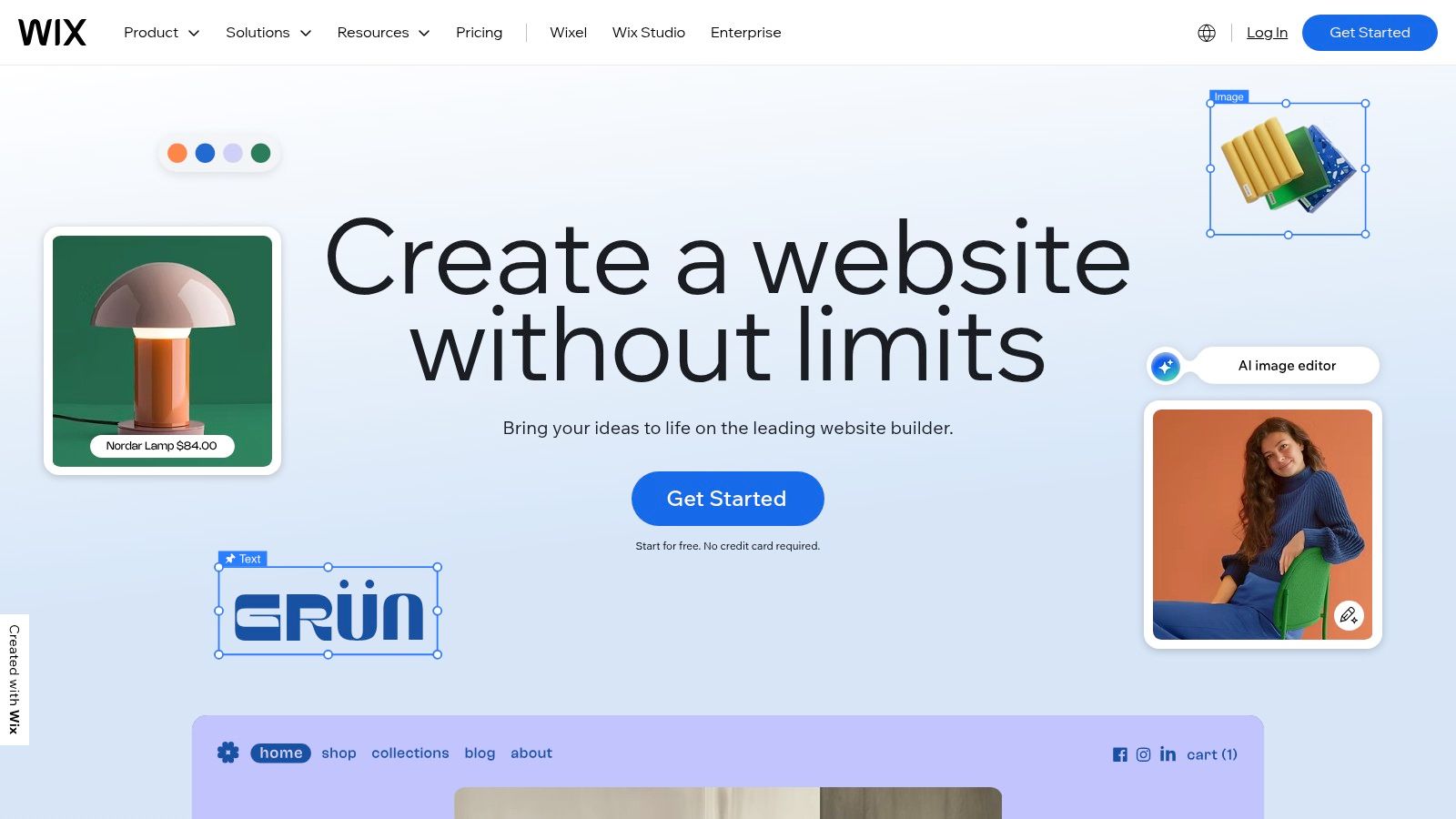
Wix has earned its spot as a dominant force among the best website builders for small business by offering an exceptional blend of speed, design flexibility, and comprehensive features. Its true drag-and-drop editor is the star, allowing you to place any element anywhere on the page without being restricted by rigid templates. This unparalleled control is perfect for business owners who want a custom look without hiring a developer.
For those needing to launch even faster, Wix ADI (Artificial Design Intelligence) can generate a complete, professional website in minutes after you answer a few simple questions. This makes it an ideal platform for getting a polished online presence up and running over a weekend.
Key Features and Use Cases
Wix is more than just a website builder; it’s a complete business ecosystem. Higher-tier plans unlock a full suite of native tools, making it a one-stop-shop for many small businesses.
- Best For: Service-based businesses (salons, consultants, restaurants) using Wix Bookings, artists and photographers needing a portfolio, and small e-commerce shops.
- Pricing: Plans range from the basic “Light” plan (around $16/month) for simple sites to “Business Elite” (around $159/month) for advanced e-commerce. Be aware that introductory prices are often for the first term only.
- App Market: The extensive App Market allows you to add advanced functionality, like event management, loyalty programs, or specialized marketing tools. However, many powerful apps come with their own subscription costs.
- Limitations: The trade-off for its ease of use is being locked into the Wix platform. Migrating your site away from Wix is difficult, and heavy reliance on apps can increase your monthly expenses significantly.
While Wix excels at getting you online quickly, those with more complex technical needs may find it limiting. You can learn more about its capabilities by exploring different website builder comparisons.
Website: https://www.wix.com/
2. Squarespace: Best for Design and Branding
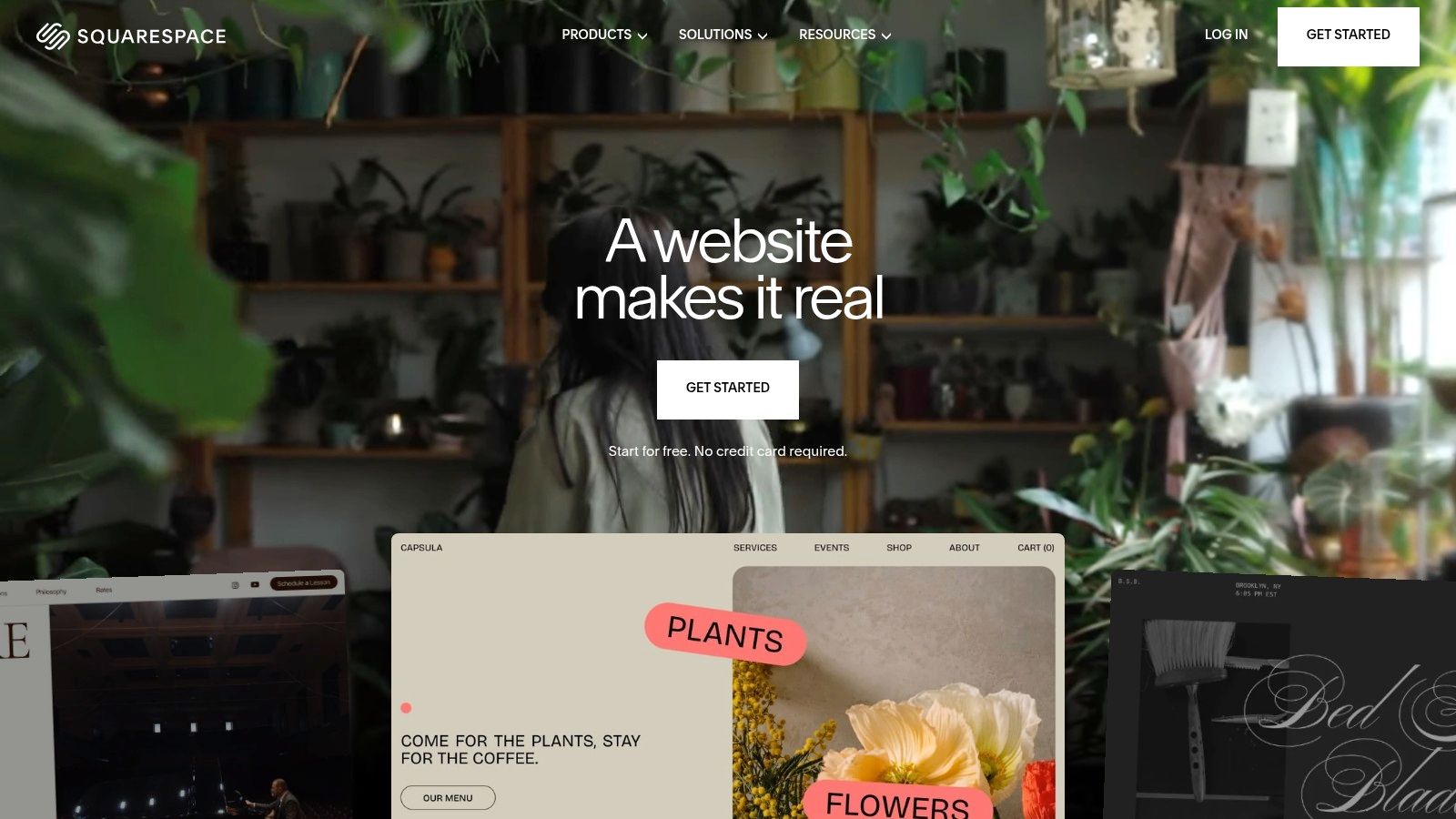
Squarespace has carved out its niche among the best website builders for small business by championing a design-first philosophy. Its award-winning templates are visually stunning and highly curated, making it the go-to platform for businesses where aesthetics and branding are paramount. Unlike the total freedom of a drag-and-drop editor, Squarespace uses a structured, section-based system that ensures your site maintains a polished, professional look across all devices.
This approach is ideal for creatives, consultants, and premium service providers who want a sophisticated online presence without the risk of a messy design. The platform bundles everything you need into one cohesive package, avoiding the complexity of managing separate plugins or apps for core business functions.
Key Features and Use Cases
Squarespace operates as an all-in-one platform, integrating marketing, scheduling, and commerce tools directly into its dashboard. This simplicity makes it a powerful choice for entrepreneurs who value streamlined management over endless customization.
- Best For: Photographers, artists, designers, bloggers, high-end service businesses, and small e-commerce stores prioritizing brand image.
- Pricing: Plans are clearly defined, starting with a “Personal” plan (around $23/month) and scaling up to “Commerce Advanced” (around $65/month). Look for regular discounts during major sales periods.
- Built-in Tools: Includes native email campaigns, robust analytics, social media integrations, and appointment scheduling tools, reducing the need for third-party subscriptions.
- Limitations: The curated nature means less flexibility and fewer third-party integrations compared to other platforms. Transaction fees apply on lower-tier business plans, and migrating your content to a different platform can be challenging.
For those who prioritize aesthetic control and a unified toolset, Squarespace is an excellent choice. You can find more information about how it stacks up against other platforms by exploring different Squarespace builder reviews.
Website: https://www.squarespace.com/
3. Shopify: The Gold Standard for E-commerce Businesses
While many builders add e-commerce as a feature, Shopify is a purpose-built platform where selling is the core function. It stands out as one of the best website builders for small business because it offers an unrivaled, end-to-end retail operating system. From its best-in-class checkout experience to its powerful inventory management and integrated shipping solutions, every tool is designed to help you sell more effectively.
Shopify simplifies the complexities of online retail, handling everything from payment processing to automated tax calculations. Its robust infrastructure is built to scale, supporting businesses from their first sale to enterprise-level volume without a hitch. This focus makes it the go-to choice when online selling is central to your business model.
Key Features and Use Cases
Shopify’s power lies in its comprehensive and integrated e-commerce toolkit, which extends far beyond a simple storefront. It enables multi-channel selling and provides deep analytics to drive growth.
- Best For: Dedicated e-commerce stores, direct-to-consumer (D2C) brands, businesses with physical locations using Shopify POS, and anyone leveraging multi-channel sales (social media, marketplaces).
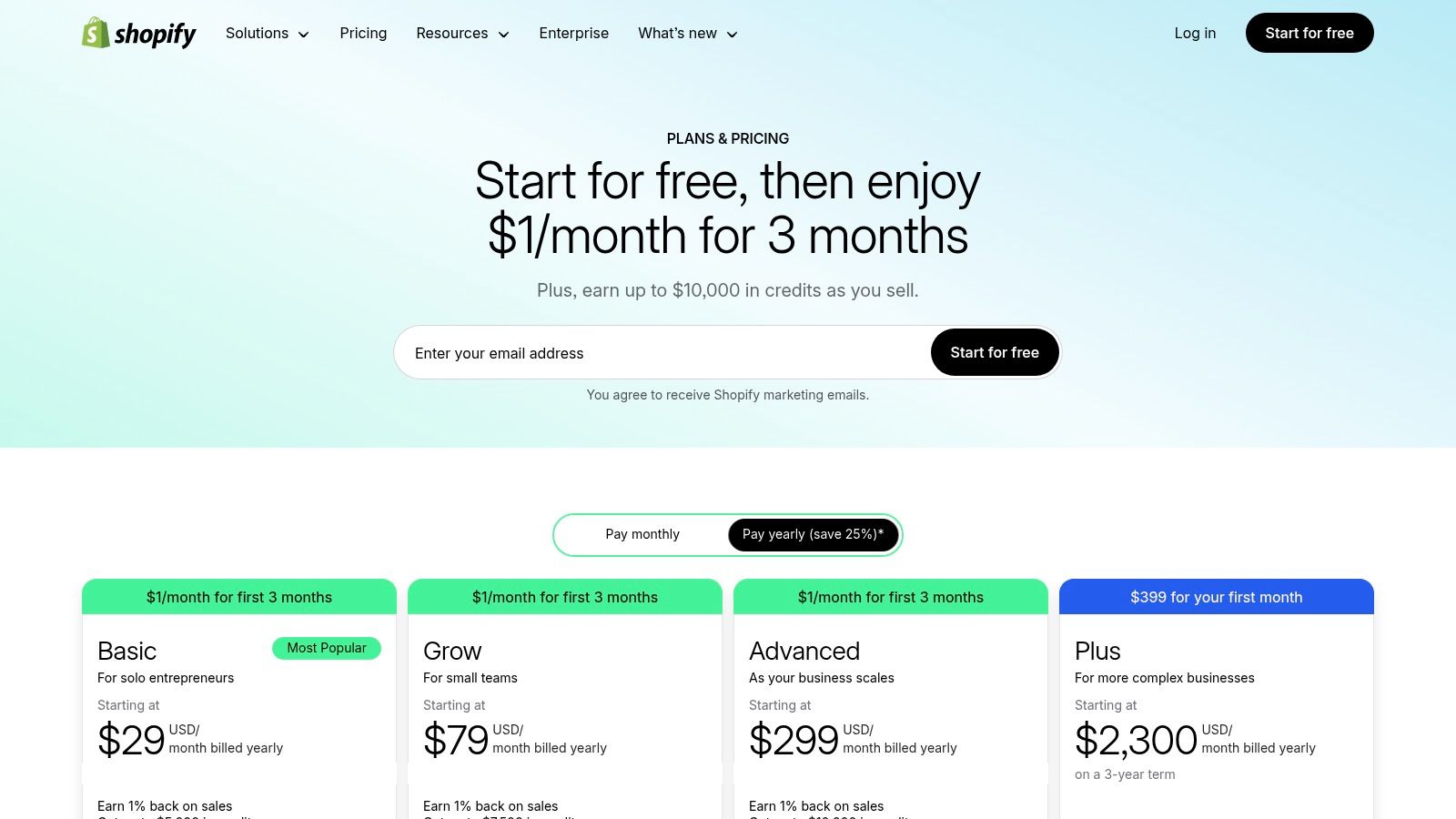
- Pricing: Plans start from “Basic” (around $29/month) for new businesses to “Advanced” for scaling stores. Shopify frequently runs promotional offers, like a $1/month trial period, making it accessible to launch.
- App Market: The Shopify App Store is a major advantage, offering thousands of integrations for dropshipping, marketing automation, customer service, and more.
- Limitations: The true cost can increase significantly with app subscriptions. While Shopify Payments is excellent, using a third-party payment gateway incurs additional transaction fees on top of the processor’s own charges.
For businesses where selling products is the primary goal, Shopify’s specialized platform is almost always the superior choice over general-purpose builders.
Website: https://www.shopify.com/pricing
4. WordPress.com: The Power of WordPress, Simplified
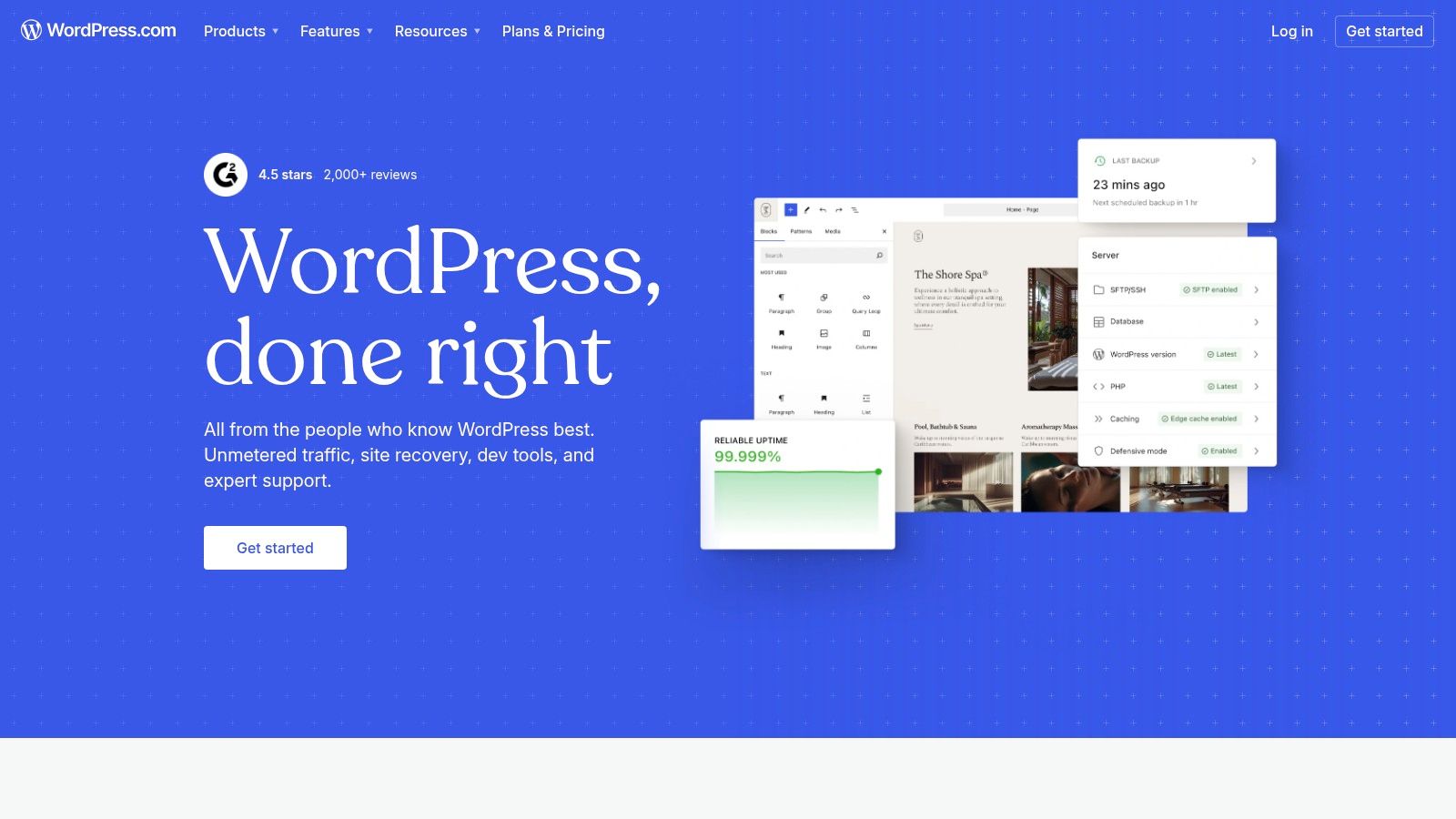
WordPress.com offers a streamlined entry into the world’s most popular content management system, making it one of the best website builders for small business owners who want the power of WordPress without the hassle of managing their own hosting. It bundles security, backups, and support into a single package, allowing you to focus on creating content and growing your brand. This hosted solution removes the technical barriers often associated with self-hosted WordPress.
Unlike its self-hosted counterpart, WordPress.com handles all the server maintenance for you. This makes it an excellent middle ground, providing more scalability than a simple drag-and-drop builder while being far more accessible than managing a server from scratch.
Key Features and Use Cases
WordPress.com is built for long-term growth, with plans that scale from a simple blog to a full-featured online store. The familiar block editor (Gutenberg) provides a structured yet flexible content creation experience that is ideal for content-heavy sites.
- Best For: Bloggers, content creators, and businesses that prioritize content marketing. It’s also great for those who eventually want the full power of WordPress but prefer to start with a managed, secure environment.
- Pricing: A free plan exists with significant limitations. Paid plans range from “Personal” (around $4/month) for custom domains to the “Commerce” plan (around $45/month) which unlocks premium themes and e-commerce extensions.
- Plugin Access: Access to the full library of WordPress plugins is restricted to the higher-tier “Business” and “Commerce” plans. Lower-tier plans have a curated selection of built-in features.
- Limitations: The primary trade-off is control. You are limited by the features available in your specific plan, and migrating away from WordPress.com to a self-hosted WordPress site can be a complex process.
For those curious about the underlying platform, you can discover more about the flexibility of WordPress.
Website: https://wordpress.com/
5. Webflow: Best for Unparalleled Design Control
Webflow is the platform for small businesses that refuse to compromise on design. It bridges the gap between simple website builders and custom-coded solutions by offering a professional, visual canvas that writes clean, semantic code in the background. This makes it a favorite among designers, agencies, and brand-conscious entrepreneurs who need pixel-perfect control over every element, interaction, and animation.
Unlike template-restricted builders, Webflow gives you direct access to powerful layout tools like CSS Grid and Flexbox without needing to write the code yourself. This high level of customization empowers businesses to create truly unique digital experiences that stand out from the competition, positioning it as one of the best website builders for small business owners with a strong brand vision.
Key Features and Use Cases
Webflow’s power lies in its professional-grade tools, robust CMS, and high-performance hosting, making it a scalable solution for growing brands.
- Best For: Design agencies, startups wanting a completely custom brand site, businesses with sophisticated content needs (like resource hubs or blogs), and those who may eventually want to export their code for custom hosting.
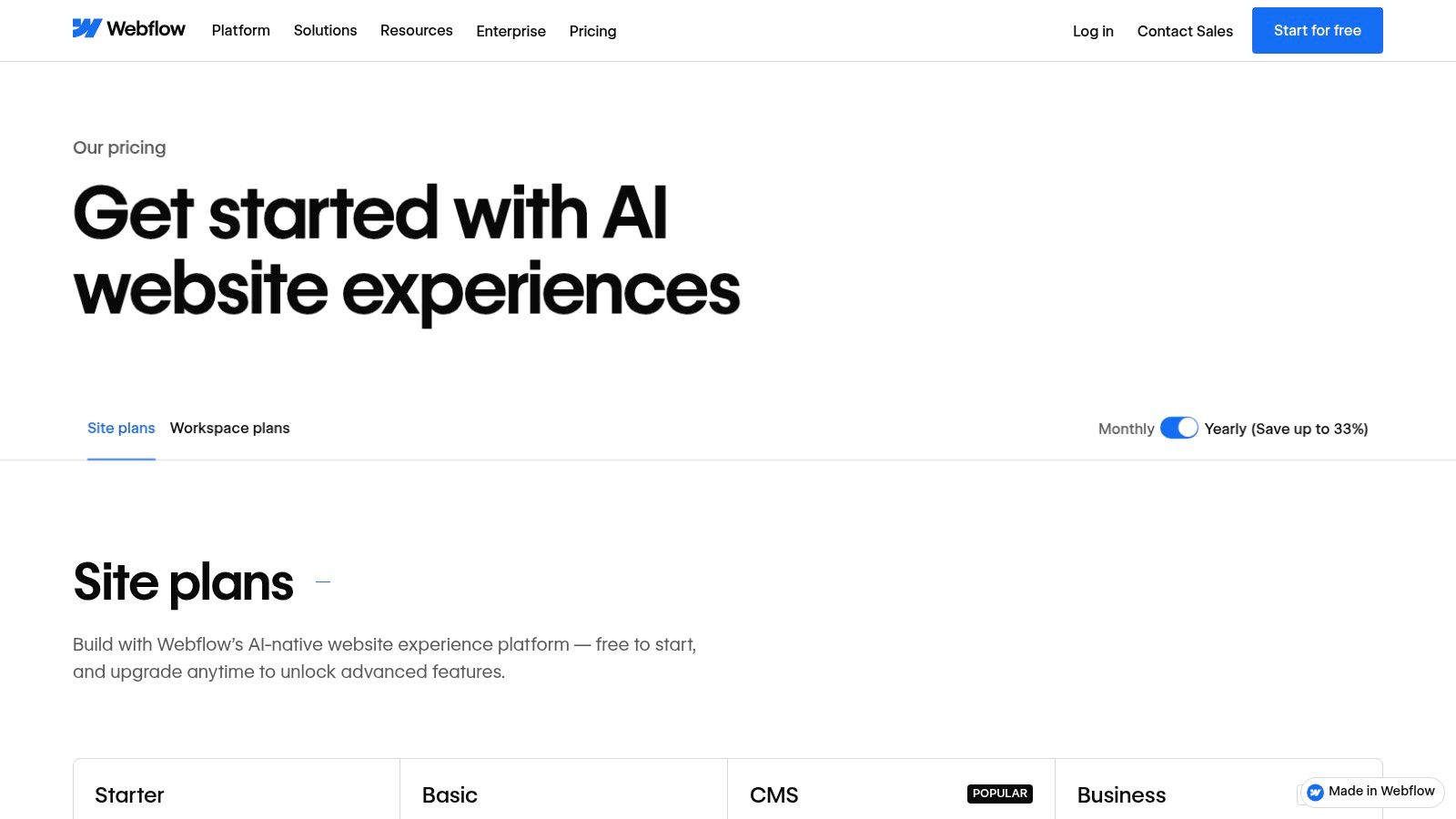
- Pricing: Webflow’s pricing is split. Site Plans (for hosting) range from a “Basic” plan (around $14/month billed annually) to “Business” for high-traffic sites (around $39/month). Workspace plans for teams and client work are priced separately.
- CMS and E-commerce: Its integrated CMS is a major strength, allowing for structured content that can be dynamically displayed anywhere. E-commerce capabilities are also available, suitable for businesses with curated product selections.
- Limitations: The primary trade-off is its significant learning curve. New users without a design background will find it far more complex than Wix or GoDaddy. Costs can also escalate with team seats, e-commerce needs, and higher-tier CMS plans.
Website: https://webflow.com/pricing
6. Square Online (Weebly)
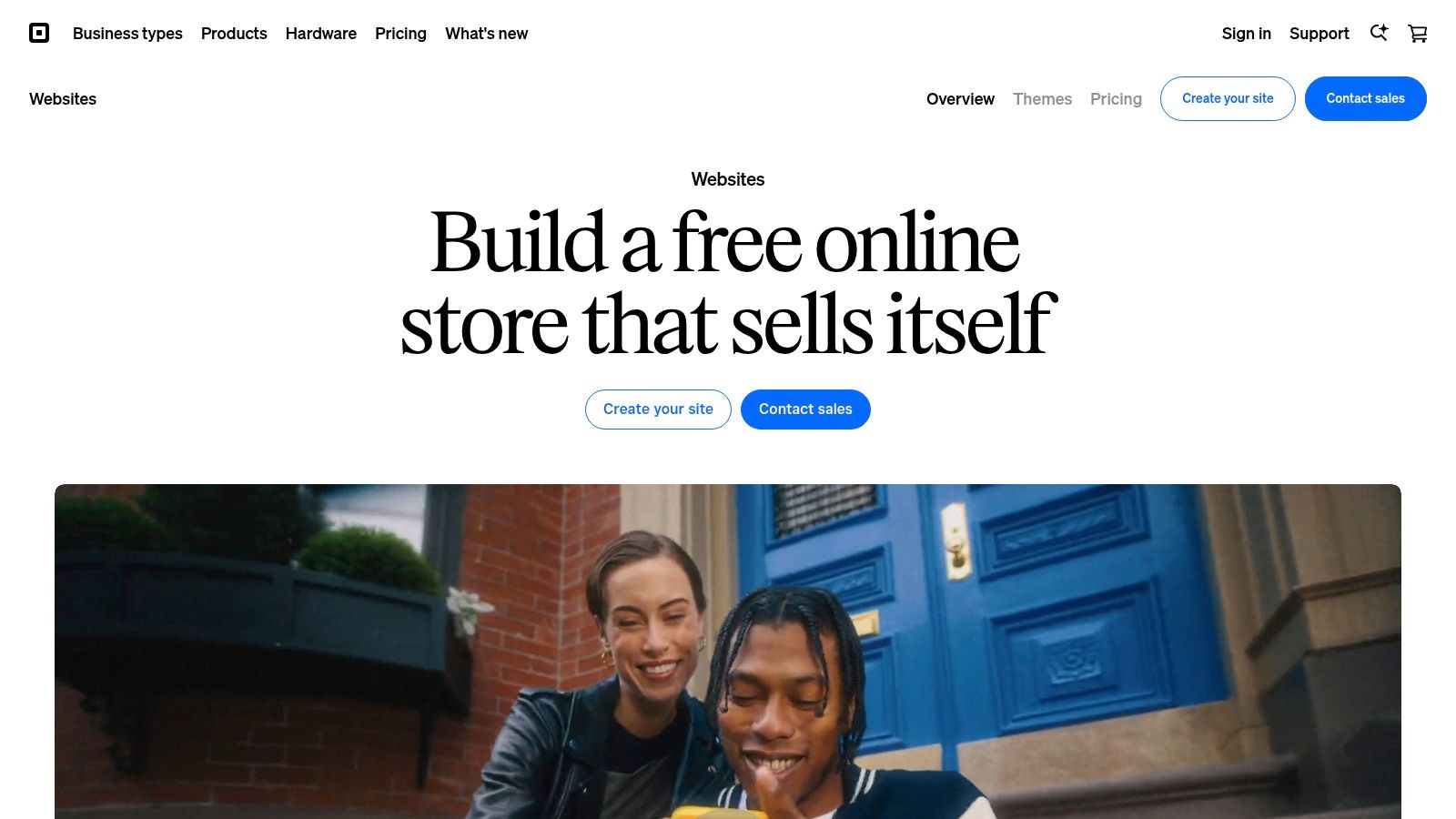
For businesses already embedded in the Square ecosystem, Square Online (built on Weebly’s foundation) is one of the most practical and efficient website builders available. Its core strength lies in its seamless integration with Square’s entire suite of payment and point-of-sale (POS) tools. This makes it a natural choice for restaurants, retail stores, and service providers who need to manage both online and in-person sales from a single, unified dashboard.
The platform is designed for speed and simplicity, automatically syncing your item catalog, inventory, and orders between your online store and your physical locations. This omnichannel approach simplifies operations significantly, allowing businesses to easily offer features like online ordering for in-store pickup or local delivery without complex technical setups.
Key Features and Use Cases
Square Online excels at bridging the gap between digital and physical commerce, making it a powerful tool for local businesses looking to expand their reach. It’s less about custom design and more about functional, transactional efficiency.
- Best For: Restaurants offering online menus and pickup, retail shops with physical locations, service-based businesses using Square Appointments, and any merchant already using Square POS.
- Pricing: A very generous free plan is available to get you selling online (you only pay Square’s transaction fees). Paid plans like Plus (around $29/month) and Premium (around $79/month) add advanced features like custom domains, abandoned cart recovery, and lower processing rates.
- Omnichannel Tools: Easily sell products directly on social media platforms like Instagram and Facebook, with all inventory managed through your central Square dashboard.
- Limitations: The focus on e-commerce and service functionality means design flexibility is more limited compared to builders like Wix or Squarespace. Advanced marketing and SEO tools often require upgrading to more expensive plans.
For merchants who prioritize integrated payments and inventory management above all else, Square Online is a top-tier choice among the best website builders for small business.
Website: https://squareup.com/us/en/online-store
7. GoDaddy Website Builder (Websites + Marketing)
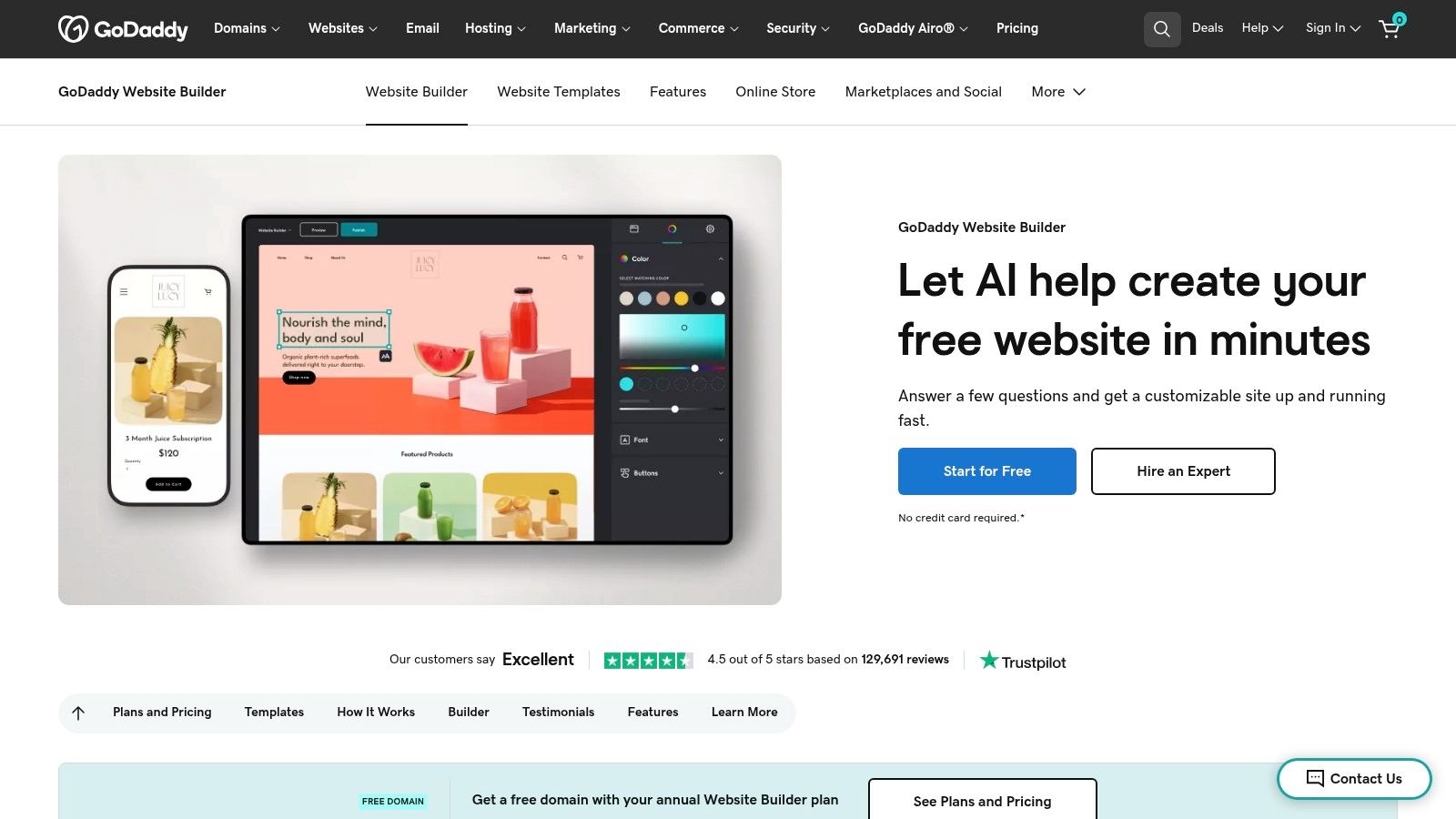
GoDaddy’s Website Builder, now bundled as “Websites + Marketing,” is engineered for absolute beginners who prioritize speed and simplicity above all else. Its primary goal is to get a professional-looking site online as quickly as possible, integrating essential marketing tools directly into the dashboard. This makes it one of the best website builders for small business owners who are wearing multiple hats and need a single, unified platform for their online presence.
The AI-assisted setup process guides you through creation, generating a functional site based on your industry and goals. While it lacks the deep design customization of rivals like Wix, its structured templates ensure your site looks clean and works well on mobile devices without any extra effort.
Key Features and Use Cases
GoDaddy excels by bundling core business tools into an easy-to-manage package, reducing the need for third-party subscriptions for basic functions. This all-in-one approach is its main selling point.
- Best For: Local service providers who need an appointment booking system, very small businesses needing a simple informational site, and entrepreneurs wanting basic email and social media marketing tools included.
- Pricing: Plans start with a free option and paid tiers beginning around $10/month for personal use, scaling up to around $21/month for e-commerce. Be mindful that renewal prices are typically higher than the introductory rates.
- Integrated Tools: The platform includes a built-in content creator for social media posts, a simple email marketing system, and a basic CRM to manage customer contacts directly from your website’s dashboard.
- Limitations: The design flexibility is very limited compared to other builders; you’re largely confined to the structure of your chosen template. As your business grows, you may find the marketing and e-commerce features too basic for advanced needs.
Website: https://www.godaddy.com/websites/website-builder
8. Hostinger Website Builder: Best Value for AI-Powered Simplicity
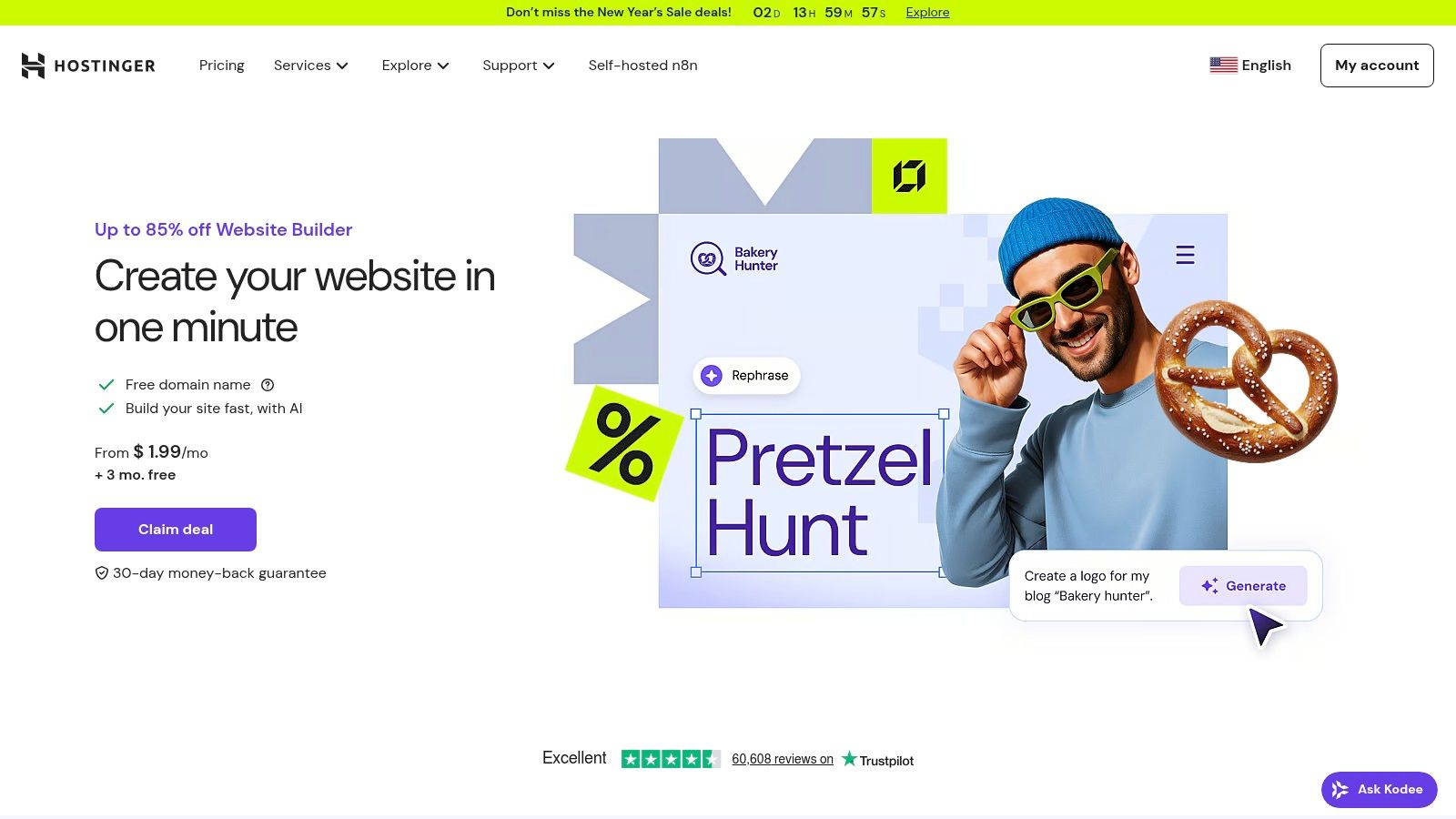
Hostinger Website Builder (formerly Zyro) carves out its niche by offering one of the most budget-friendly entry points into the website builder market, without skimping on modern tools. Its heavy integration of AI is a key differentiator, providing an AI site generator, logo maker, and content creation tools that help small businesses on a tight budget launch a professional-looking site quickly. The platform is designed for simplicity, making it a strong contender for those who find more complex builders overwhelming.
The included free domain and email hosting on annual plans add significant upfront value, making it an all-in-one package for new ventures. This focus on affordability and AI-driven efficiency makes it a compelling choice for businesses prioritizing speed and cost-effectiveness over deep customization.
Key Features and Use Cases
Hostinger’s platform is lean but powerful, focusing on core business needs and leveraging AI to streamline the creation process. It’s particularly attractive for those just starting out.
- Best For: Startups and micro-businesses needing an affordable all-in-one package, entrepreneurs who want to leverage AI for content and design, and simple e-commerce stores that can benefit from zero transaction fees.
- Pricing: The single “Website Builder & Web Hosting” plan is aggressively priced, often with deep introductory discounts (around $2.99/month). This plan includes e-commerce capabilities. Critically, renewal prices increase significantly after the initial term.
- AI Toolkit: The built-in AI tools are genuinely useful for overcoming creative blocks. The AI Writer can generate page copy, and the Heatmap tool helps predict where visitors will focus their attention on your site.
- Limitations: The builder has fewer third-party integrations compared to giants like Wix or Shopify, which can be a drawback for businesses needing specialized functionality. The template selection, while professional, is also less extensive than some competitors.
Hostinger is one of the best website builders for small business owners who need to get online fast with minimal investment, as long as they are aware of the renewal pricing structure.
Website: https://www.hostinger.com/website-builder
9. Duda: The Professional’s Choice for Client Site Management
Duda distinguishes itself as a premier website builder, specifically engineered for digital agencies, freelancers, and businesses managing multiple websites. It offers a powerful combination of speed, technical SEO prowess, and sophisticated client management tools that streamline the web design process from start to finish. Its structured, section-based editor provides design consistency while still allowing for deep customization.
This platform is ideal for those who build sites for others, providing white-labeling options and a client dashboard to simplify handoffs and ongoing maintenance. This agency-centric model is a key reason it’s considered one of the best website builders for small business service providers.
Key Features and Use Cases
Duda’s strength lies in its scalability and robust feature set designed for professional use. It uses top-tier AWS hosting with a global CDN, ensuring excellent performance and reliability for all sites built on the platform.
- Best For: Web design agencies, freelancers building client sites, and businesses that need to manage multiple brand websites under one account.
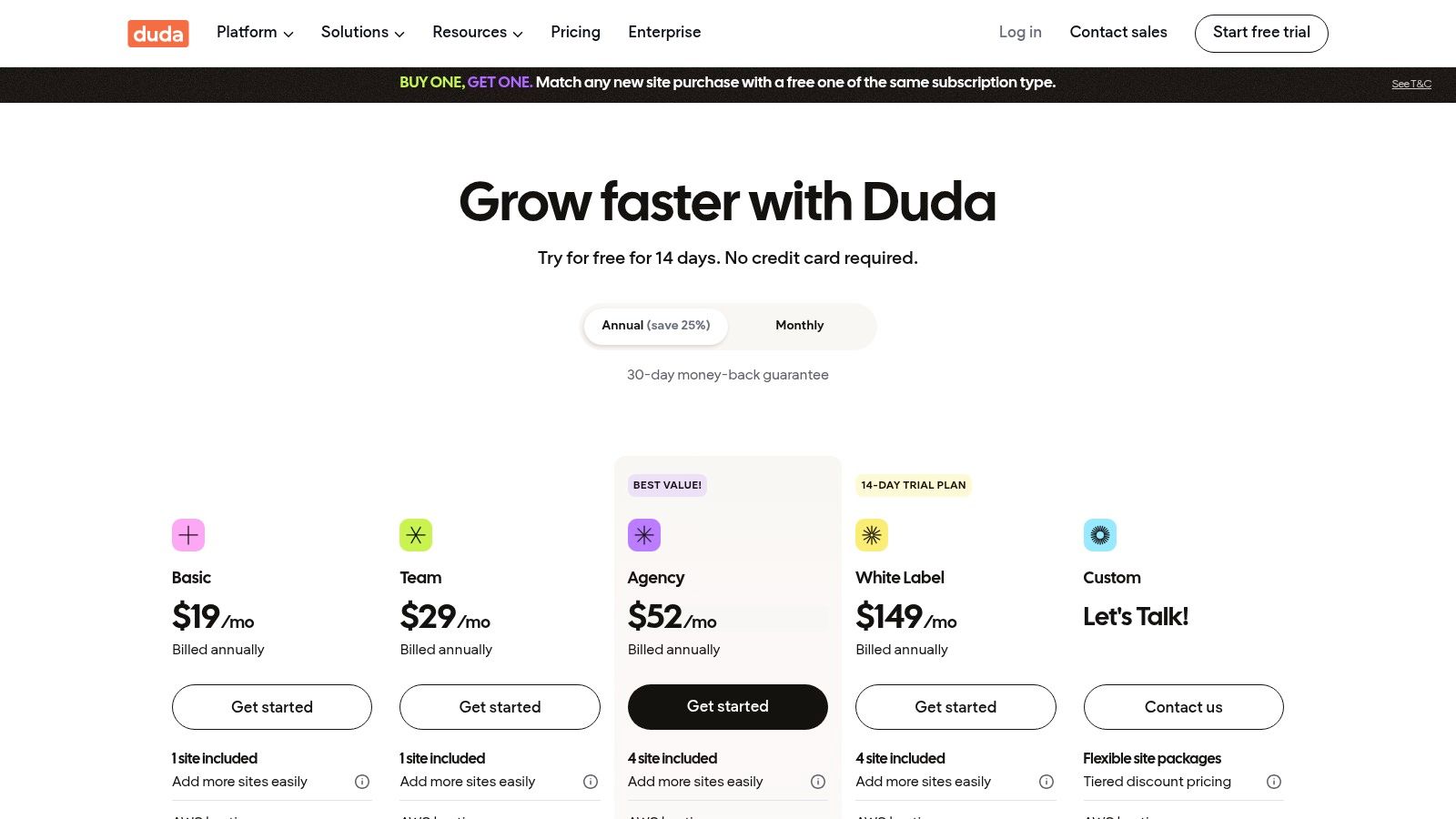
- Pricing: Agency plans start around $29/month (billed annually) for one site and team member, scaling up to the “Agency” plan at around $52/month, which includes four websites and robust client tools. Ecommerce is a per-site add-on.
- Collaboration Tools: Features like site comments and client-specific permissions make it easy to gather feedback and grant clients access to edit content without breaking the design.
- Limitations: For a small business owner needing just one simple website, Duda can be pricier than other entry-level builders. Its e-commerce functionality, while capable, comes as an additional cost per site, which can add up.
Website: https://www.duda.co/pricing
10. Elementor (WordPress Page Builder): Best for Custom WordPress Design
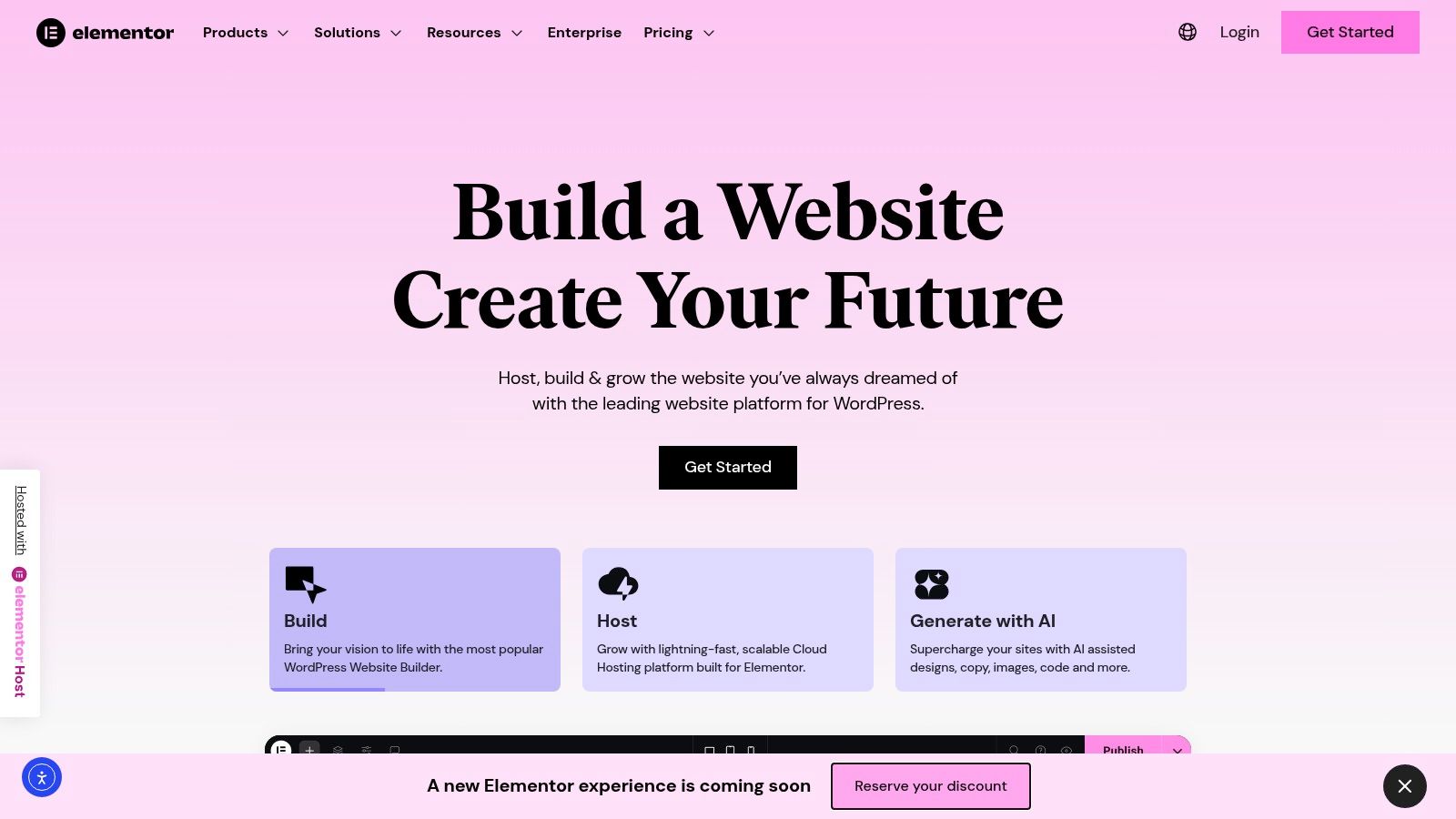
Elementor stands out by offering the design freedom of a drag-and-drop builder within the powerful, open-source WordPress ecosystem. It’s a plugin, not a standalone platform, giving you granular control over your website’s layout and functionality. This combination is ideal for small business owners who want a highly customized, conversion-focused website without needing to write code.
Unlike all-in-one builders, Elementor empowers you to choose your own hosting, giving you full ownership and control over your site’s data and performance. Its visual editor lets you build complex layouts, customize every detail from headers to footers, and see your changes in real-time.
Key Features and Use Cases
Elementor bridges the gap between user-friendly page building and the robust capabilities of WordPress, making it one of the best website builders for small business owners who anticipate future growth.
- Best For: Businesses that need a custom-designed WordPress site, e-commerce stores using WooCommerce, and marketing agencies building sites for clients.
- Pricing: A capable free version exists. Pro plans, which unlock the Theme Builder, forms, and popups, start at $59/year for one site and scale up to $399/year for 1,000 sites. This does not include hosting or domain costs.
- Advanced Tools: The pro version includes a powerful Theme Builder and WooCommerce Builder, allowing you to design every part of your store, from product pages to the checkout process.
- Limitations: It requires you to manage your own WordPress installation and hosting, which involves a steeper learning curve than all-in-one platforms. Overloading your site with too many third-party Elementor add-ons can also slow down performance if not managed carefully.
Website: https://elementor.com/
11. BigCommerce: Best for Scalable E-commerce with No Transaction Fees
BigCommerce carves out its niche among the best website builders for small business by focusing purely on powerful, scalable e-commerce. It stands as a direct competitor to Shopify, appealing to growth-minded sellers with its robust native feature set and, most notably, its policy of zero added transaction fees on any plan. This makes it an incredibly cost-effective platform as your sales volume increases.
The platform is engineered for merchants who anticipate significant growth, offering enterprise-grade tools like advanced SEO capabilities and multi-channel selling across platforms like Amazon, eBay, and social media. While its design editor is less intuitive for absolute beginners compared to a drag-and-drop builder like Wix, it provides the necessary tools for creating a high-converting online store.
Key Features and Use Cases
BigCommerce is built from the ground up to handle complex inventories, international sales, and both B2C and B2B business models, making it a versatile choice for serious retailers.
- Best For: Growing D2C brands, businesses with large product catalogs, and retailers planning to sell internationally or venture into wholesale (B2B).
- Pricing: Plans start with “Standard” (around $29/month) and scale up based on your annual sales volume. This predictable structure helps manage costs but be aware that you will be automatically upgraded to a higher plan upon hitting a sales threshold.
- Built-in Tools: It boasts a comprehensive suite of native features, including unlimited products, storage, and bandwidth, reducing the need for costly third-party apps for core functions.
- Limitations: The learning curve for its theme editor is steeper than many competitors, requiring more time to customize. The automatic plan upgrades tied to sales revenue can be an unexpected expense for rapidly growing stores that are not prepared for it.
Website: https://www.bigcommerce.com/essentials/pricing/
12. Bluehost (AI Website Builder on WordPress)
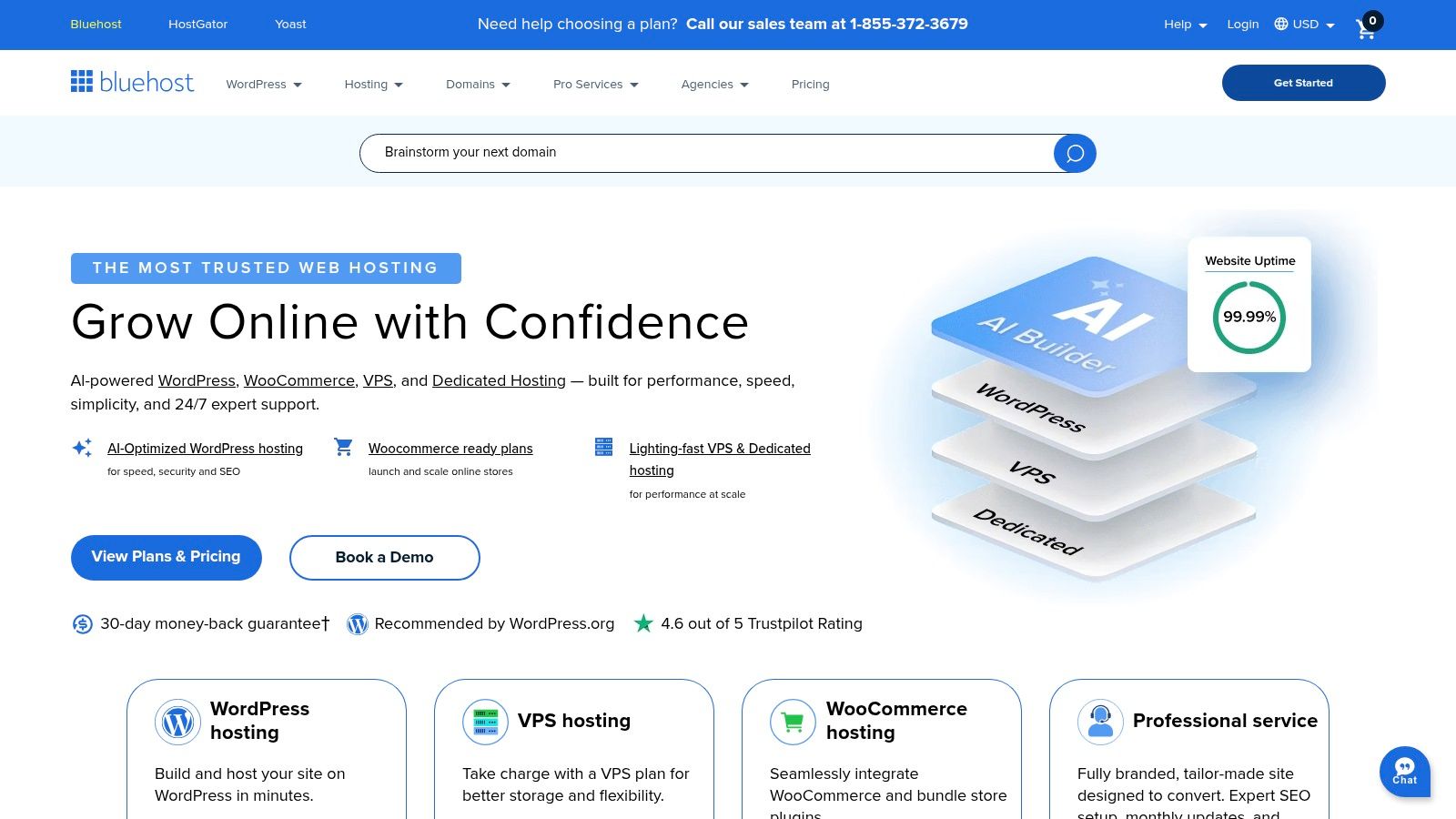
Bluehost enters the list of the best website builders for small business not as a standalone platform, but as a WordPress-centric host with an integrated AI builder. This unique approach is designed for entrepreneurs who want the power and ownership of WordPress without the steep learning curve. The guided setup process uses AI to generate a foundational site with professional copy and images based on your business description, effectively bridging the gap between simple builders and the robust WordPress ecosystem.
It’s an excellent starting point for those who anticipate needing WordPress’s scalability down the road but need a helping hand to get started. The platform bundles everything: hosting, a free domain for the first year, SSL security, and the builder itself into one cohesive package.
Key Features and Use Cases
Bluehost’s value lies in simplifying the WordPress experience, making it a powerful yet accessible choice for those committed to the platform. It’s a guided entry into a world of endless customization.
- Best For: Small businesses that want to build on WordPress but feel intimidated by the setup process, and new e-commerce stores looking for an all-in-one WooCommerce and hosting solution.
- Pricing: Introductory hosting plans that include the builder start very low (often around $2.95/month). Specialized WooCommerce ‘Commerce Solution’ bundles offer more e-commerce features at a higher price point. Remember that renewal rates will be significantly higher than the promotional price.
- Guided WordPress Setup: The AI builder streamlines initial design and content, but you retain full access to the WordPress dashboard and the flexibility to install any plugin or theme later on.
- Limitations: The builder experience is not a pure drag-and-drop editor like Wix or Squarespace; it operates within the WordPress framework (using block patterns and pre-designed sections), which can feel more restrictive. Your site is fundamentally a WordPress site, which comes with its own maintenance responsibilities.
Website: https://www.bluehost.com/
Top 12 Website Builders for Small Business — Feature Comparison
| Platform | Core features ✨ | UX / Quality ★ | Price / Value 💰 | Target audience 👥 | Standout / USP 🏆 |
|---|---|---|---|---|---|
| Wix | Drag‑and‑drop, 800+ templates, native ecommerce, AI tools | ★★★★☆ | 💰 Strong promos; higher renewals | 👥 Small businesses & non‑tech users | 🏆 All‑in‑one builder + app market |
| Squarespace | Polished templates, commerce, marketing & analytics | ★★★★☆ | 💰 Mid‑range; periodic discounts | 👥 Creatives, brands, portfolios | 🏆 Best visuals & brand polish |
| Shopify | Native payments, POS, multi‑channel, app ecosystem | ★★★★★ | 💰 Commerce‑first pricing; apps add cost | 👥 Online merchants scaling sales | 🏆 Best checkout & commerce tools |
| WordPress.com | Managed WP hosting, premium themes, commerce tiers | ★★★★☆ | 💰 Flexible tiers; hosting included | 👥 Users wanting WP without server mgmt | 🏆 WordPress power + managed service |
| Webflow | Designer‑level control, CMS, exportable clean code | ★★★★☆ | 💰 Premium for design/control | 👥 Designers, agencies, custom brands | 🏆 Pixel‑perfect design + clean code |
| Square Online (Weebly) | Square payments/POS, omnichannel selling, free plan | ★★★★☆ | 💰 Free tier; integrated payments | 👥 Local merchants, cafes, retailers | 🏆 Seamless online↔offline payments |
| GoDaddy Builder | AI setup, templates, basic SEO & CRM tools | ★★★☆☆ | 💰 Low entry price; renewals higher | 👥 Very small teams needing speed | 🏆 Fastest setup & simple dashboard |
| Hostinger Builder | AI editor, logo maker, free domain on many plans | ★★★☆☆ | 💰 Very low promos; renewal jumps | 👥 Budget‑conscious SMBs | 🏆 Best entry‑level price + AI tools |
| Duda | White‑label, client permissions, team workflows | ★★★★☆ | 💰 Pricier for single sites; per‑site billing | 👥 Agencies & freelancers managing clients | 🏆 Multi‑site client management |
| Elementor (WP) | Theme & WooCommerce builder, widgets, templating | ★★★★☆ | 💰 Plugin licensing; hosting separate | 👥 WordPress builders & agencies | 🏆 Full‑site visual control on WP |
| BigCommerce | Unlimited products, no extra transaction fees, B2B tools | ★★★★☆ | 💰 Competitive for growth merchants | 👥 Growth‑oriented & B2B sellers | 🏆 Enterprise ecommerce features |
| Bluehost (AI WP) | Hosting + AI site builder, WooCommerce bundles | ★★★☆☆ | 💰 Low promo hosting; higher renewals | 👥 SMBs wanting hosted WordPress | 🏆 Guided WP setup with hosting bundle |
Beyond the Builder: When to Choose a Custom WordPress Solution
Choosing the right platform from our list of the best website builders for small business is a critical first step in establishing your digital presence. We’ve explored a dozen powerful options, from the all-in-one simplicity of Wix and Squarespace to the eCommerce might of Shopify and BigCommerce. Each tool offers a unique blend of ease-of-use, features, and affordability designed to get your business online quickly and professionally.
For many startups and solopreneurs, these builders are the perfect solution. They remove technical barriers, allowing you to focus on what you do best: running your business. The drag-and-drop interfaces, pre-made templates, and integrated marketing tools provide a solid foundation for growth.
However, as your business evolves, your needs will become more complex. You might require specific integrations, advanced SEO controls, or a completely unique user experience that a template-based system simply cannot deliver. This is where the path forward diverges.
Identifying the Limits of a Closed System
Website builders operate within a “walled garden.” While this provides security and simplicity, it also creates inherent limitations. You are bound by the platform’s pricing structure, feature roadmap, and integration library. If a critical tool you need doesn’t exist within their ecosystem, you often have no recourse.
Consider these common growth-related challenges:
- Custom Functionality: Your business model might require a bespoke feature, like a unique booking system, a specialized customer portal, or a complex product configurator.
- Deep SEO Optimization: While most builders have good SEO basics, you might need granular control over schema markup, site speed, or URL structures to dominate a competitive niche.
- Data Ownership and Portability: Migrating your content and design from one closed-platform builder to another can be difficult, if not impossible, effectively locking you in.
- Scalability and Performance: As your traffic grows, you need a platform that can scale with you without forcing you into an expensive enterprise-level plan that lacks flexibility.
If these potential roadblocks align with your long-term vision, it’s time to look beyond the standard builders.
The Case for a Self-Hosted WordPress Solution
This is where self-hosted WordPress shines as the ultimate long-term asset. Unlike the all-in-one builders, WordPress is open-source software, which means you own it completely. You have total freedom over your design, functionality, and data.
This unparalleled flexibility allows you to build a website that is a true extension of your brand and a finely-tuned engine for conversions. With access to over 50,000 plugins and a global community of developers, virtually anything is possible. You can integrate any marketing automation tool, connect to any payment gateway, and optimize every single element for performance.
But this power comes with a trade-off: responsibility. Managing hosting, security, backups, and updates requires technical expertise and time that most small business owners simply don’t have. This management gap is precisely why many businesses hesitate to unlock the full potential of WordPress.
That’s where a managed approach becomes the ideal hybrid solution. It combines the limitless customization of WordPress with the peace of mind of a fully supported service. You get a custom-built, high-performance digital asset without the headache of managing the technical backend. For small businesses aiming for significant growth, a professionally managed WordPress site isn’t an expense; it’s a strategic investment in a platform that will never hold you back.
Ready to build a website that truly grows with your business, without the technical burden? outrank-wp.site specializes in creating custom, conversion-focused WordPress websites for small businesses, providing the power of open-source with the ease of a fully managed service. Visit outrank-wp.site to see how a professional WordPress solution can become your most valuable marketing asset.

Previous Article
Czym zastąpić mąkę kukurydzianą w kuchniNext Article
How to Start a Blog That Gets Noticed
One thought on “The 12 Best Website Builders for Small Business (2026 Review)”
How to Start a Blog That Gets Noticed
January 15, 2026 at 6:26 am[…] you're still weighing your options or prefer a more all-in-one solution, checking out the best website builders for small business can give you a good comparison against the power and flexibility of WordPress. Of course, at […]